
ATS Treatments

Root Canal Treatment (RCT) – Save Your Natural Tooth with Pain-Free Dentistry at ATS Dental Clinic In Thoraipakkam

Why Choose Root Canal Treatment?

At ATS Dental Clinic, we believe in saving your natural teeth whenever possible. A Root Canal Treatment is recommended when the pulp (the innermost soft tissue of the tooth) becomes infected or inflamed due to deep decay, cracks, or trauma.
Without treatment, the infection can spread, leading to severe pain, abscess formation, and tooth loss.
RCT not only relieves pain but also preserves your natural tooth, allowing you to chew comfortably and maintain a healthy smile.
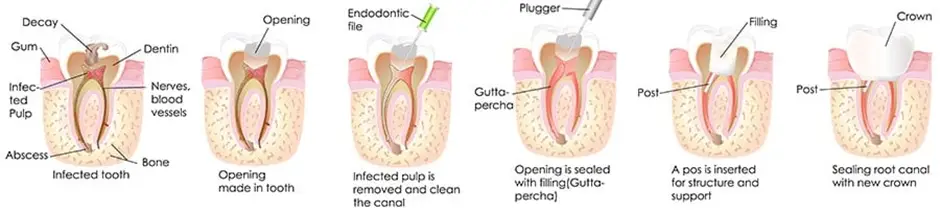

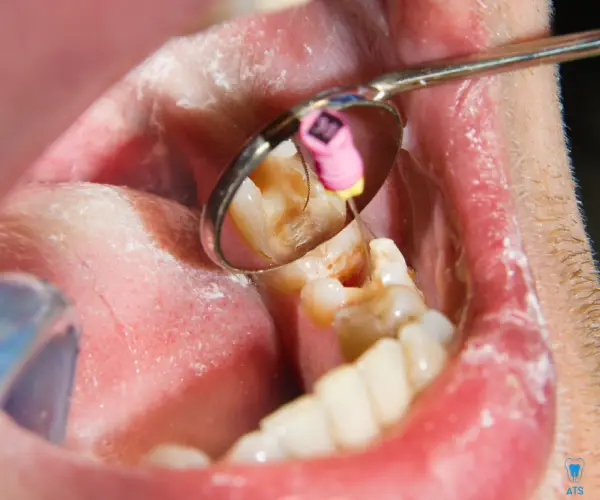
When the nerve dies, a root canal is needed to prevent bacteria from spreading. The hole that is left is filled and then capped with a crown. Basically, the root canal treatment prevents the need to remove a tooth once the nerve of the tooth has been removed.

A root canal can also be used when there is an abscess. This occurs due to infection. If you have a tooth that is painful to touch or if you cannot bite down or chew using a tooth, then you may have a dental abscess.

Extreme sensitivity can also be cause for a root canal. Though, generally, a root canal is reserved until all other treatments have been used. If you cannot treat the sensitivity using other options, such as proper dental care, then a root canal might be recommended.

In certain cases, a root canal is needed before performing other restorative work. For example, when getting a crown or a bridge, your dentist may need to file or adjust the shape of some of your existing teeth. If this leads to an exposed nerve in one of your teeth, then a root canal must be planned to prevent nerve pain.

Common Reasons for Root Canal Treatment:

Procedure of Root Canal Treatment at ATS Dental Clinic

  • Step 1 – Diagnosis & X-rays

    We begin with a digital X-ray to assess the extent of infection and plan the procedure.
  • Step 2 – Local Anaesthesia

    We ensure a pain-free experience with advanced anesthesia techniques.
  • Step 3 – Cleaning the Infected Pulp

    The infected pulp tissue is carefully removed using microscopic precision.
  • Step 4 – Disinfection & Shaping

    The canals are cleaned, disinfected, and shaped for filling.
  • Step 5 – Sealing the Canals

    Biocompatible material is used to seal the root canals, preventing reinfection.
  • Step 6 – Final Restoration

    A dental crown is placed to restore strength, function, and aesthetics.

What are the benefits of Root Canal Treatments?

Why should you consider getting a root canal? The most common reason is to prevent the spread of infection. But, this is not the only reason. Here are the main benefits of getting a root canal treatment:

Prognosis – How Successful is Root Canal Treatment?

With advanced technology at ATS Dental Clinic, the success rate of RCT is over 95%.
When combined with a crown and proper oral hygiene, a treated tooth can last a lifetime.

Frequently Asked Questions (FAQ)

  • Is root canal treatment painful?

    No. At ATS Dental Clinic, we use advanced local anaesthesia and modern rotary instruments to ensure a pain-free root canal experience. Most patients feel relief rather than pain during the procedure.

  • How long does a root canal take?

    A root canal usually takes 1–2 sessions of 45–90 minutes each. With single-sitting RCT technology, we can often complete the procedure in just one visit.

  • Can I eat after root canal treatment?

    You should avoid eating until the numbness wears off (usually 2–3 hours). Stick to soft foods for the first 24 hours and avoid chewing on the treated tooth until the crown is placed.

  • How do I know if I need a root canal?

    Common signs include severe tooth pain, prolonged sensitivity to hot/cold, swelling of gums, or a pimple-like bump near the tooth. A dental X-ray confirms the need for RCT.

  • What happens if I don’t get a root canal?

    The infection can spread to surrounding tissues, causing severe pain, swelling, jawbone damage, or even systemic health issues. In most cases, the tooth will eventually need extraction.

  • Is it better to extract the tooth instead of a root canal?

    Saving your natural tooth with RCT is always better for chewing efficiency, jawbone health, and aesthetics. Extraction should be the last option when a tooth is beyond repair.

  • How much does a root canal cost in Chennai?

    The cost varies depending on the tooth’s location, complexity, and whether single or multiple sittings are required. At ATS Dental Clinic, we offer affordable RCT packages with EMI options.

  • Can a root canal tooth get infected again?

    If the crown is delayed or oral hygiene is poor, reinfection can occur. Proper aftercare and timely crown placement ensure long-term success.

  • Do I need a crown after a root canal?

    Yes. After RCT, the tooth becomes brittle. A dental crown protects it from fracture and restores strength, function, and appearance.

  • How long does a root canal last?

    With proper care, a root canal-treated tooth can last a lifetime. Regular check-ups and good oral hygiene are essential for durability.